Showing posts with label How It Can Be Minimized?. Show all posts

Tuesday, November 19, 2019

Proper Waste Management.

Climate change impacts are only one of a number of environmental impacts
that derive from solid waste management options. Other impacts include health effects attributable to air pollutants such as Nitrogen dioxide, Sulfer dioxide, dioxins and fine particles, emissions of ozone depleting substances, contamination of water bodies, depletion of non-renewable resources, disamenity effects, noise, accidents etc. These environmental impacts are in addition to the socio-economic aspects of alternative ways of managing waste. All of these factors need to be properly considered in the determination of a balanced policy for sustainable waste management, of which the climate change elements are but one aspect. The study is not intended as a tool for municipal or regional waste planning, where local factors, such as the availability of existing waste management facilities and duration of waste management contracts, markets for recyclables, geographic and socio-economic factors, will exert the dominant influence.

General waste management techniques are:


  • Landfill: It involves having the waste buried off in empty, deserted locations outside the city. Dumped waste is made to undergo compression to enhance the density and make the fill stable. It is later covered to discourage vermin growth. A gas extraction system is customarily installed to exact the gas (arising out of decomposition) through a burrow pit.
  • Incineration: Waste is exposed to high temperature to trigger combustion and ultimately reduce to ash, gas and heat energy. Toxic wastes from industry are thermally treated in furnace and boiler to extract energy. This method is useful where land is scarce. Gasification and Pyrolysis methods involve heating waste in short supply of oxygen at high temperature inside a pressurized and sealed vessel. The resultant residue is used for energy generation.
  • Recycling: Paper, plastic, PVC and other homogenous products can be recycled to put them in use in a new garb. This also rids the environment of non-biodegradable, chemical wastes that significantly disturb the ecological balance.
  • Biological reprocessing: Wastes of organic origin are made to undergo biological decomposition and re-used as compost or mulch for agriculture and landscaping. Gas collected is used for electricity generation.
  • Waste Reduction and Avoidance: The stress is on increased use of second hand products, repaired products and reducing the use of complex disposable items to keep a tab on waste generation in abundance.
  • Recycling Solutions: Recycling is a superlative way to capitalize on accumulated waste by chemically treating it to make it fit for re-use. Recycling equipment make the waste processing method streamlined and cost-effective.

What Governments are doing?

Climate Change is the biggest battle of this century and probably the toughest humans have faced until this day. And the more worst part of this is we don't know how much this battle will grow because in this battle we can't differentiate between the enemy and fighter. In this case, both the enemy and the fighter are we...we HUMAN BEINGS and if this is the scenario then how we suppose to end this battle. As the issue of climate change continues to rise with the time governments eventually start pondering on the fact that how we can prevent this phenomenon of climate change that is destroying our planet.
Governments of different developed countries have been taking their best move against this climate change in the world they are launching different awareness campaigns on the national and international levels as well against climate change. This is a serious issue and the world leaders gathered to solve this issue made agreements most notable of them is the PARIS AGREEMENT under the supervision of the United Nation.
International Agreements on Climate Change are listed below:

  • Paris Agreement (2016):

The Paris Agreement is an agreement within the United Nations Framework Convention on Climate Change, dealing with greenhouse gas emissions mitigation and adaptation, and finance, signed in 2016. The agreement's language was negotiated by representatives of 196 state parties at the 21st conference of UNFCCC in  Paris and adopted by consensus on 12 December 2015. As of November 2019, 195 UNFCCC members have signed the agreement, and 187 have become a party to it.
The Paris Agreement is a long-term temperature controlling agreement that is meant to keep the temperature of this planet to keep in a moderate stage. Its goal is to keep the increase in global average temperature to well below 2 °C above pre-industrial levels; and to pursue efforts to limit the increase to 1.5 °C, recognizing that this would substantially reduce the risks and impacts of climate change. This should be done by peaking emissions as soon as possible, in order to "achieve a balance between anthropogenic emissions by sources and removals by sinks of greenhouse gases" in the second half of the 21st century. It also aims to increase the ability of parties to adapt to the adverse impacts of climate change, and make "finance flows consistent with a pathway towards low greenhouse gas emissions and climate-resilient development."

  • Kyoto Protocol (1997):
In the middle of the last decade of 20th-century UNFCCC members realized that more strong provision is needed to reduce emissions. In the year 1997, all the members agreed to the Kyoto Protocol, which introduced legally binding emission reduction targets for developed countries. It's second commitment period of the Kyoto Protocol began on 1 January 2013 and will end in 2020. Approximately 38 countries show their interest in this agreement also including the member states of the European Union. This second period is covered by the Doha amendment, under which participating countries have committed to reducing emissions by at least 18% below the levels decided in1990s. The EU has committed to reducing emissions in this period to 20% below 1990 levels. The main weakness of the Kyoto Protocol is that it only requires developed countries to take action. As the United States has never signed up to the Kyoto Protocol, Canada pulled out before the end of the first commitment period and Russia, Japan, and New Zealand are not taking part in the second commitment period, it also only now applies to around 14% of the world's emissions. However, more than 70 developing and developed countries have made various non-binding commitments to reduce or limit their greenhouse gas emissions.

These are of the 2 major agreements that the world has made regarding their fight against climate change and of course, there are many more agreements regarding climate change. But the main thing is not just to make the agreements and leave those signed papers in the cabinet or highly protected safes of developed countries. But to implement them practically this earth is our only home and if we keep it ignoring the challenges it faces today we will have to face the consequences of it in the near future or till the end of this world.

Stop Deforestation.

Forests or more precisely Trees have been a part of Human Civilization from the very first day and these are probably the most important factor behind human survival because they produce what is the most important thing we need as human beings for our survival OXYGEN and they also absorb many harmful gasses mainly CO2 which can kill a healthy person. Before humans, the earth mainly consisted of water and trees (Forests) but the day Human civilization started they started using those forests for their survival the early human beings use the tree leaves to cover their body parts and also for FIRE purpose to cook their foods and to keep them warm then as the civilization started to grow they also start using the wood for their light for night and as the population grows the consumption of wood also grows with the time until it reaches today's condition where the forest starts becoming short in resources and it raises major issues as well.
Killing forests at a rapid pace is raising major issues regarding Climate Change which is really a concerning issue for us because the carbon dioxide level is rising very rapidly and it would be very dangerous for us. As the population is growing rapidly the need for space for more humans and wood is also increasing so today's civilization starts cutting down trees in a brutal way and the number of trees starts decreasing and the atmosphere starts polluting because as the trees the materials which protect living organisms from breathing bad air. Deforestation is happening everywhere on the planet for many different reasons that vary from region to region. The killing of the forest also affecting the wildlife which requires forests to survive and the number of species has been facing extinction if we can't stop killing forests.
"Death Of Forest Is The End Of Our Life." 
Trees help regulate the climate, filter water through their root system, capture dust particles and pollutants from the air and stabilize soils against erosion. They perform these vital services equally for everyone. Ending deforestation is the best chance we have to stabilize our climate, save wildlife species and protect our well-being. Protecting the forest is our mutual responsibility, no matter how far away we live from the nearest one. Adopt some of these strategies to help prevent the loss of more trees. There would be a number of solutions for stoping or better if we say minimizing deforestation here are some simple methods listed below which do not need any description to understand them. We have to adopt these methods to save our planet.


  1. If we assign ourselves an additional duty of planting a Tree where we can ONE PERSON ONE TREE imagine how rapidly would the number of trees will grow and what benefit they will provide us.
  2. Go paperless at home and in the office. Since we are living in a digital era so we have to adopt technology and digital devices.
  3. Buying recycled products would also decrease the demand for more and new products which would also mean a decrease in wood demand and then we can also recycle them again and again.
  4. Support the products of companies that are committed to reducing deforestation. It’s all about business. If you don’t buy them, they will be encouraged to improve their practices.
  5. Raise awareness in your circle and in your community.
  6. Buy only what you will use do not buy any additional items just for fun. 
  7. Don’t use Palm Oil or products with Palm Oil because they also increase demand in cutting down trees.
This Planet is our only home in this big universe and if we keep destroying it like we are doing right now then our coming Race.

Monday, October 28, 2019

Renewable Energies


There is no other way to change the worst climate condition of our Eco-System without taking brave steps: nearly 40% of US CO2 pollution comes from power plants burning fossil fuels. Similarly, in every other developed country, they are all using an immense amount of energy resources to accomplish their needs in the field of energy. Fossil Fuels are being burnt in large amounts to meet the requirements of modern-day energy. And this behavior of countries towards meeting their energy requirement is certainly not in favor of our Climate or Eco-System. But we can turn things around. But the question is how we can change all this and turn things around since it is not an easy task to do. But if we decide to do something no hurdle will be in our way.
Renewable energy is that type of energy which we can use again and again without any bad effects on our environment. There are many sources of renewable energy that exist the thing is to adopt them. It minimizes carbon pollution and has a much lower impact on our environment. Giving people more access to renewable energy can allow them to reduce their own energy bills while reducing stress on the grid stations and demand for fossil fuel power. This can also save money as well as allow us all to breathe cleaner air.

Types of Renewable Energy:

  • Solar Energy: One very comprehensive solution to reduce global warming caused by energy could be the use of SOLAR ENERGY at commercial and house level. Humans have been using energy coming from the SUN from the very first day to cook crops, stay warm and for dry fruits. According to the National Renewable Energy Laboratory "More Energy falls on the earth in one hour then is used by everyone in the world in one year." So, why waste this much amount of energy? Sun is a natural source of energy and the energy coming through its rays can be used for various purposes e.g. for powering Industry, homes and also at other workplaces. Solar Cells are specially designed for this purpose. Solar Cells or Photovoltaic Cells are made of Silicon Chips or other materials that transform Sunlight directly into electricity. These can be used to produce energy for homes or for the industry also. This is a very cheap and easy method and if adopted it can reduce the use of other costly methods to generate electricity.
    A Solar Settlement in a Housing Community in Germany.


  • Wind Energy: Air is the GODs greatest blessing on man. It is the only thing that requires for human survival without it everything in this whole universe might face extinction. Where it is that much necessary for human survival is also a source of renewable energy. It can be used to produce Electrical energy by placing windmills in the coastal areas because the speed of air in those areas is relatively higher than in other areas. Wind energy turns a turbine blade which is connected to an electrical generator that produces electricity when they are rotated by Winds at high speed. This is probably the cheapest way to produce electricity more than 6% of US energy comes from windmills.
    Wind Mills placed on the coastal area of Denmark.

  • HydroElectric Power: Hydropower is one of the largest renewable energy sources in the world. It relies on water mostly high-speed water coming from a big height like in DAMS. Hydropower method is used to generate energy in more than 140 countries of the world with Asia Pacific region countries contributing to more than 32% of the world's global hydropower generation by the year 2010. Water contributes more than 70% of our whole Eco-System and if it is used in a correct manner it can be helpful for producing more energy and controlling global warming on a large scale. China is the country with one of the largest producers of hydropower with a total production of 721 Terra Hours by the year 2010.
    Three Gorges Dam in China is the world's largest Dam.

  • Tidal Power: Tides are the rise and fall of oceans level by the combined effect of the gravitational pull of Sun during day and Moon during the night. It is a natural process happening from centuries causing the sea level to rise naturally. But, How this natural rise and fall in waves can be used to generate energy? Here's how. Scientists of the 20th century have discovered a way to generate electrical energy using these tides it uses special types of generators or paddles to produce electrical energy in the areas where the tides are usually high. Tidal energy is still in its infancy. The amount of energy produced by tides is still very low but scientists are working to improve their efficiency.
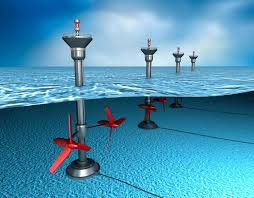
    Graphical illustration of  Tidal Energy Generators.

Climate action is not just a defensive play, in order to coup with it we need to take some brave steps. We have to see every challenge as an opportunity to modernize our power sector and build a low-carbon economy that will fuel growth for decades to come. This is the only possible way to make our world a heaven for the coming generations. We have to replace fossil fuels as an energy source with green power or more precisely renewable energy sources because this is the time to do the right thing to save our next generations from the worst outcomes of climate change. This is the most important action we can take to address the impacts of climate change on health and to reduce pollutants that can lead to disease.

Renewable energies offer so many benefits, from changing air and reducing the pollution, to lowering prices and taking us off the destructive boom-and-bust a merry-go-round of fossil fuel prices.

Urbanization

Human beings have become an increasingly powerful environmental force over the last 10,000 years. With the advent of agriculture 8,000 year...